Sunday, August 8, 2010

How Pleasure Works


I have just finished reading a wonderful book by Yale psychologist Paul Bloom. It is called How Pleasure Works but perhaps it should have been called The Varieties of Pleasurable Experience. In his book, Professor Bloom catalogues the many ways humans get pleasure, ranging from the basic, (food, sex), to the sublime, (music, art), to the shocking, (cannibalism, memorabilia collecting).

While discussing examples from history, literature, current events, news reports, and laboratory and real-world psychology studies, Bloom makes accessible the theories of many insightful researchers who have spent years studying aspects of the common but complex set of emotions we call pleasure.

Activities as wide-ranging as playing sado-masochistic sex games, collecting and looking at paintings, riding vomit-inducing roller coasters, killing, cooking, and eating a volunteer “victim”, and reading books about pleasure are discussed and examined in order to lay out an overarching theory of pleasure.

Bloom argues compellingly that much of what we experience as pleasure is rooted in the human belief in essentialism. It is a widely-studied and documented tendency in humans to attribute an almost magical power to some people and objects. We see it with small children and their favorite blankets, with athletes and their lucky talismans, with keepsakes and souvenirs from special places we have visited, and with our willingness to pay huge sums for objects once used by celebrities.

Just try replacing a child’s security blanket with one that is slightly different. Brad Pitt’s sweat-stained undershirt would sell for much more than mine would on eBay. Two visually identical paintings are worth vastly different sums of money if one is done by Vermeer and the other is an exact copy by someone else. Much of what we experience as pleasure comes not from the object or experience itself, but from some hard-to-define quality we attribute to someone or something connected to the object or experience.

Bloom’s book gave me much to think about while on vacation in Montana last week. I had a lot of free time to read because we were staying at Erica’s grandfather’s cabin and there is no Internet access at the cabin. Reading his book engaged my mind, entertained me, and gave me things to talk about with friends and family. I liked the book a lot. And, as I said, the reason I was able to finish the book in just a few days was the lack of Internet access.

But now that I am home, (and once again able to access the Internet any time, day or night, in any room and even on the front porch), I am pondering an aspect of pleasure Paul Bloom did not address in his otherwise excellent book. Specifically, I am wondering why it is that I am awful at accurately predicting how much, (or how little), pleasure I will get from spending time on my computer?

When I step back and watch myself, I am forced to conclude that I MUST get a lot of pleasure from spending time on the Internet. After all, I spend hours a day checking the weather in Billings, MT, looking at my checking account balance, reading news of politics and gossip on the Huffington Post website, seeing how many people have visited my blog, catching up with all of my friends on Facebook, reading the newspaper, and following my unfettered curiosity as it crashes haphazardly through the limitless trivia and marginalia available on the Internet.

I must like it, right? After all, time is the single most precious commodity humans have. Our hours are numbered and the total is unknown to us. And for me to spend so many of my hours on the Internet clearly means I must derive immense pleasure from my time there, right?


And yet…why, when I finally hit the “Sleep” command and step away from the laptop, why do I feel like shit? It is not pleasure I get from my time online. In fact, it is the opposite. Spending a chunk of time on the computer usually makes me feel slightly manic, somewhat angry, and mostly depressed. Tell me something Paul Bloom, why do I consistently choose to do something that gives me the opposite of pleasure?

Friday, July 23, 2010

Love the Way You Lie

My daughter has recently graduated from riding in the back seat of the car to sitting up front in the “shotgun” seat. As a result, I have gotten a crash course in the state of pop music in 2010. Before the move, our car radio rarely strayed from the far left end of the dial where our two public radio stations reside. Now the tuner makes regular forays all the way to the other end and I know far more about Jason Derulo and Ke$ha than I frankly care to know.

Isabel is ten and it was right around ten that I started to develop my own musical tastes, so I am trying to be as open-minded as possible about what we listen to. My parents somehow made it through ad naseum playings of entire albums by Styx and Foreigner so I figure the least I can do is bite my tongue as Isabel goes from station to station looking for Usher’s OMG one more time.

However, just last week a song that entered our car made me seriously consider my laissez-faire approach to Isabel’s musical exploration. It was Eminem’s duet with Rihanna called “Love the Way You Lie.” The song is a passionate first person look at a dysfunctional relationship and it ends with a threat of murder. It includes an infectious chorus sung by Rihanna in a sweetly angelic voice. Problem is, the words of the chorus excuse horrific male behavior, lies, and threats of violence with the refrain, “Just gonna stand there and watch me burn, but that’s alright because I like the way it hurts. Just gonna stand there and watch me cry, but that’s alright because I love the way you lie, I love the way you lie.”


I am no prude when it comes to lyrics. I cannot put my iTunes on shuffle when I am at work or when Isabel has friends over for fear of the “wrong” songs coming up while other people’s children are in my care. I am not especially protective about what Isabel sees, hears, or reads. Nor do I have a problem with Eminem—I find his brash, insulting, violent, and misogynistic singing persona interesting, insightful, and often very clever.

But at the same time I want my daughter to grow up to be a strong, self-assured, independent woman who will not sublimate her feelings and needs to those of an asshole. This song has presented me with a real parenting challenge. It is so catchy and so compelling a song that it is sure to be everywhere all summer long. I certainly can’t ban it from Isabel’s ears. Nor do I really want to.

What I have decided to do is to let it play every time it comes on, even to sing along full-throatedly as we tool down Whitney Avenue. And then, sometimes when the song ends, to have a conversation with Isabel about the lyrics and why I find them so horrifying. I do not want to be one of those humorless liberals who takes all the play out of life with political correctness, but I just cannot let his lyrics stand unchallenged. When I look to my right and Isabel is singing along with Rihanna’s excuse of atrocious male behavior, I want her to know that Rihanna herself was the victim of a violent man and that there is no excuse for violence in a loving relationship. Eminem is a masterful provocateur and instead of censoring him from our car I want to thank him for writing such a catchy conversation starter.

On the other hand, when Ke$ha’s “Tik Tok” comes on, I simply exercise full parental control and change the station within the first four notes.

Friday, July 9, 2010

This Year's (Illegal) Garden

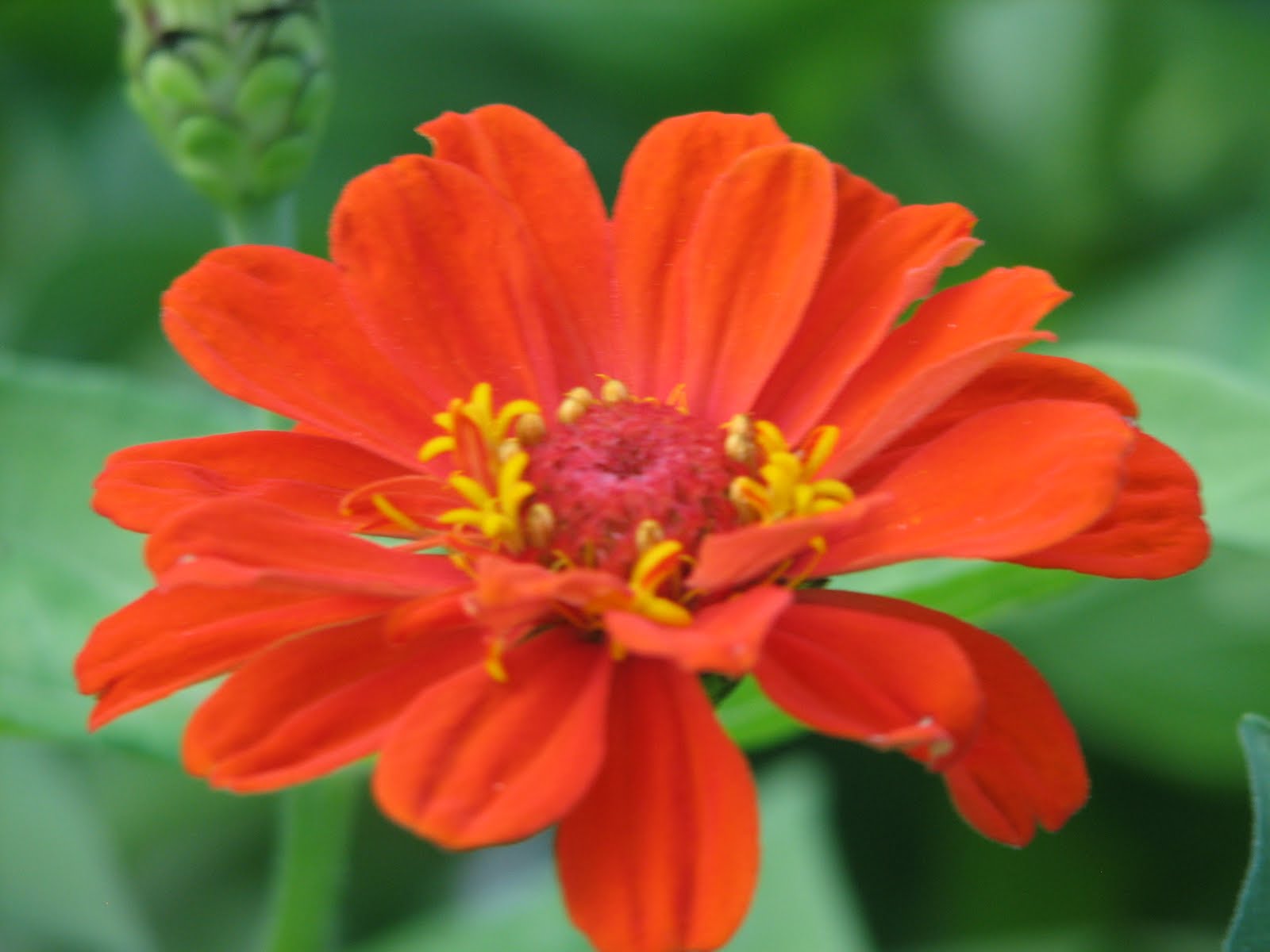
Here are some pictures of our front garden. It has been an excellent year for our tomatoes, the sunflowers are 8-feet tall, the beans are hugely prolific, and the basil is feeding my pesto addiction quite nicely. The zinnias, black-eyed-susans, and mums are doing what they always do. A friend watered things for us during the heat wave while we were in Montana, (thank you, Sarah), and now we are gearing up to eat a pound of green beans per person per day for the duration.


Friday, July 2, 2010

Swingball


Keeping in the spirit of simplicity that ended my last post, Isabel and I have invented a new game. To play you need a ball and a swing. (We call the game Swingball, for obvious reasons.)

When we come to visit the relatives in Laurel, Montana there is the danger that Isabel will wake up early and watch way too much tv. It is a constant parental struggle to get her outside and active—partly because she wants so badly to vegetate and partly because we want so badly to vegetate while on vacation here.

When we are at Grandpa Andy’s cabin or visiting the “cousins” in Bozeman, there is no such struggle. There is no tv at the cabin, and in Bozeman there are too many kids and too much fun to be had to waste time staring at a screen, watching other people pretend to do stuff.

But here in Laurel life can quickly settle into a bad pattern of staying up late in front of a movie and then waking up early, (since we are often still on Connecticut time), and turning on the television to kill a few hours before everyone else is up and about.

This morning at 7:30 Isabel and I went over to the park just around the corner from Grandpa Andy’s. We brought a shiny red soccer ball with us but had no real plan. We both just knew that in the direction of the tv lie sloth and self-loathing.


Isabel started swinging and I started to throw the ball at her feet as they climbed on the upswing. Sometimes things connected just right and the ball went flying over my head and over the fence surrounding the playground. We quickly devised rules and a system of points to be awarded for each player based on goals and saves.

Here is what we came up with, though you should feel free to modify it based on your particular setting and skill levels.

The goal is roughly 30 feet wide. The goalkeeper stands 25 feet from the swinger, with the goal behind the keeper. The keeper throws the ball at the swinger’s feet as the swinger begins to come forward—you may need to practice the timing of your throws.

If the swinger connects and the ball goes forward it is the keeper’s job to make the save. If the ball is stopped on the ground by the goalie, the goalie is awarded one point. If the ball passes the goalie on the ground, the swinger gets a point.

If the ball passes the goalie in the air at a height between the goalkeeper’s feet and head, the kicker gets two points. If the goalie stops the ball in the air between his/her feet and head, the keeper gets two points.

If the ball goes over the goalie’s head without being caught, it is three points for the swinger. If the goalie manages to block or catch a ball over head level, it is three points for the goalkeeper.

You play until someone has 20 points. Then you switch roles and start over.

That is all there is to it. We are off to play another round and take some pictures.

Wednesday, June 30, 2010

The best food--EVER

Isabel asked me a little while ago: “What is the best food you have ever eaten?” The timing of her question was perfect, as it was about 92 degrees and the air was so thick you could sip it up with a straw.


Without hesitation my mind zipped through 22 years and thousands of miles back to a stretch of Red Sea coast just south of al Hodeidah in Yemen. It was spring, which in that part of the world meant high temperatures and high humidity. My friends Tim and Nick planned a three-day backpacking trip along the coast and they invited me to join them. Being a sucker for a dumb idea, I agreed.


There was nothing along the coast where we hiked except for two or three small fishing villages inhabited by Yemenis who turned out to be fairly suspicious of our motives for sleeping in the hot sand. I can’t say I blame them for being suspicious. Here were three “Amrikis” walking along a stretch of coast that never saw a tourist, taking pictures, speaking Arabic, and sleeping just outside the village at a time when the daily high temperatures were close to 110 degrees.

We were dreadfully underprepared for the conditions and on the first day I came as close to heat stroke as a person can get without actually succumbing. In the early afternoon we stopped in the meager shade of a few palm tress—some standing, some fallen—and had a nap. Though calling it a nap implies some sort of agency on my part. Really what happened was I took off my pack and the next thing I knew it was late afternoon, there was sand stuck to my face, and my muscles were all cramping up pretty bad. I had passed out next to the fallen palm where I had sat to get my pack off.

We had assumed we could get water—though now that I think about it I really don’t know what we were thinking. When we all got up that afternoon we scouted for the wells we had heard were present on that part of the coast. Eventually we found a pit in the sand with some stagnant water full of mosquito larvae twitching around in the heat. Even they seemed really uncomfortable. This was the well.

And, even though we were fairly dumb, we did understand that we needed water or things could get a lot worse. So, we used a tee shirt to strain water into our bottles. We managed to keep most of the visible wildlife out of our water containers and hiked on to a spot where we could sleep.

Yemen is not too far north of the equator and the sun sets fairly early there year-round. And even though we had probably burned several thousand calories hiking in the heat of the day, none of us felt hungry. We built a small fire from driftwood and bought a couple of fish from the fisherman next door. We tried to roast the fish on sticks with little success. We went to sleep by eight o’clock that night with semi-raw fish and who knows what all-else sloshing around in our guts.

The sand holds on to the heat of the sun far better than the air does, so that night was terribly uncomfortable. It was like trying to sleep on one of those heating pads people plug in and adhere to lizard enclosures to provide the cold-blooded creatures steady warm temperatures. The problem is, I am not cold-blooded and it is hard to sleep when you are being slow-roasted. Eventually exhaustion won and I fell asleep.

Hunger woke me at 4 am, and I laid still for a while, hoping it would just go away and let me drift back to sleep. It didn’t go away and when I opened my eyes I was rewarded with a sight I will not forget. The Southern Cross was there in the dark night sky, hanging out over my head like it had been hoping to get my attention, to catch my eye—just to say “hey.”

I was by then awake enough to have to actually do something about my hunger, so I reached into my backpack and grabbed some Turkish soldiers’ bread called kudam. I ripped off a chunk of the dense bread and crammed it in my mouth. And within a few seconds I spit it back out and my mouth felt like it was on fire.

Turns out some painful biting ants had crawled into bag and gotten into the bread and were not pleased with my efforts to reclaim the bread. I fell asleep full of resentment and more than a little hungry. When dawn came I just wanted to get the hell out of there.

The second day was better, in the same way that the second day of radiation therapy is probably better—not because anything is really improved but because the parameters of the pain have been set and you know what to expect a little bit better.

We hiked a few miles and set up camp late in the afternoon. Nick thought there might be a small town a mile or two inland and set out walking. I joined him. And he was right. In the village we bought some bottled water, had a bowl of bean stew at a shack, and then discovered the best food I have ever eaten. It was at a non-descript little market stall with a portable generator. The man who ran the stall had a big cooler full of homemade popsicles. We each bought one and ate it at brainfreeze pace. We then each bought another and ate those as we walked back to camp to tell Tim what we had found.


I made the roundtrip one more time with Tim and ate two more of the popsicles. They were made of Vimto and nothing has ever tasted better to me, before or since. After fortifying ourselves with popsicles we hitched a ride back to my apartment in Hodeidah, where Tim and Nick showered and caught the next bus out of the coastal plain and up into the mountains, where they lived in 7,000+ foot altitude of the capital, Sana’a.

So, I told Isabel about the backpacking trip and the near-heat stroke and seeing the Southern Cross and the ants biting my tongue and then the miraculous taste of the Vimto pops. And now, at least for a couple of days, I will remember that sometimes the simplest things really are the best.